Field Guide·April 30, 2026

Skinning a Skull out of a Cape

Head work for separating the cape from the skull — the Y cut, antler bases, ear butts, lip line, eyes, pre-orbital gland, corners of the mouth, and the nose.

Grant Gullicks
Grant GullicksFounder · Master Taxidermist · Wild Reflections
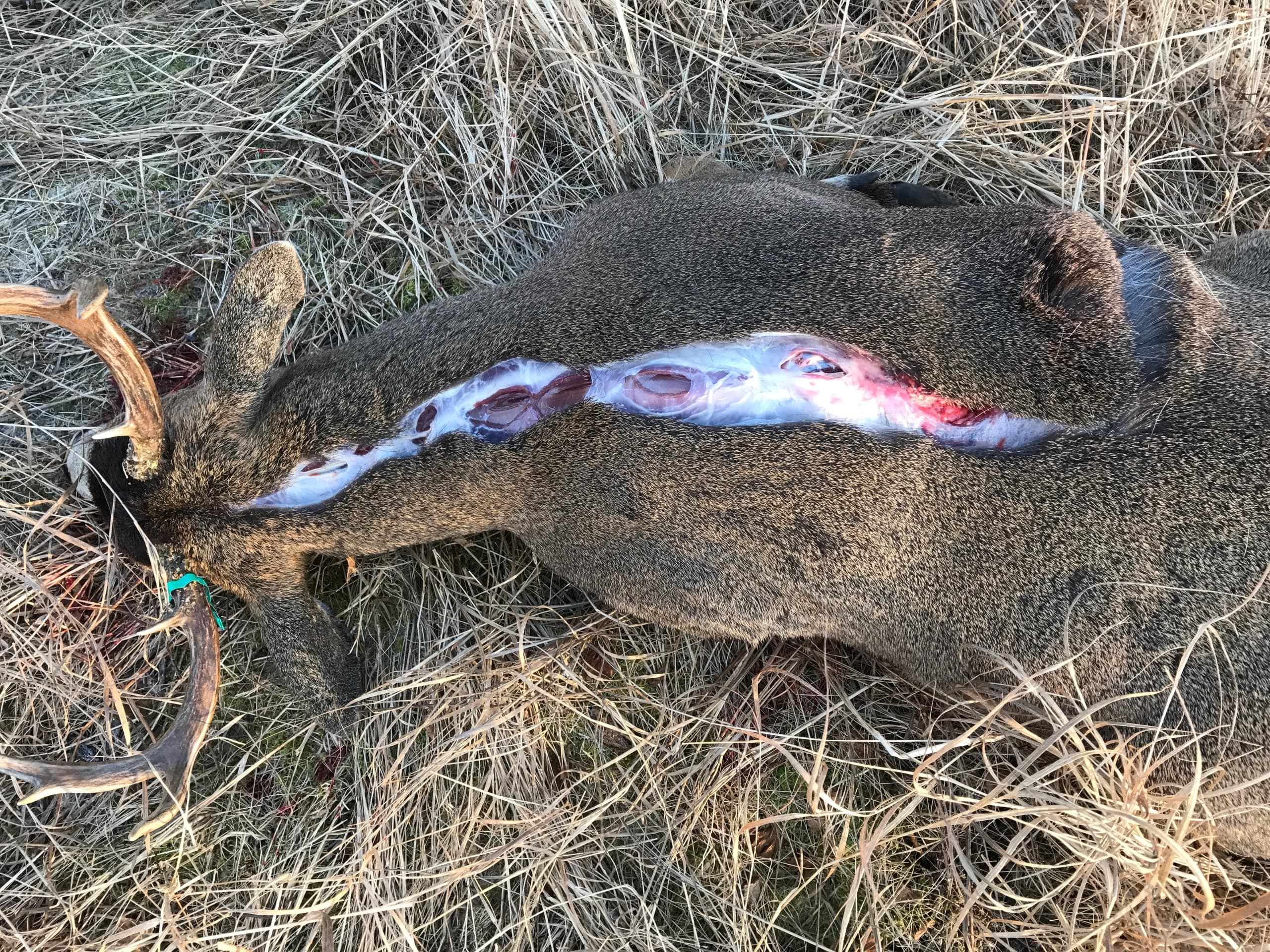
Two side-by-side photos showing a hand making the Y cut along an antlered animal's hairline, then the resulting Y-shaped incision between the antler bases

Skinning the Cape Off of the Skull

The Y Cut

This cut is made on the top of the head between the ears. Follow the hair patterns with your knife to cut a "Y". Cut all the way to each base of the antler or horn.
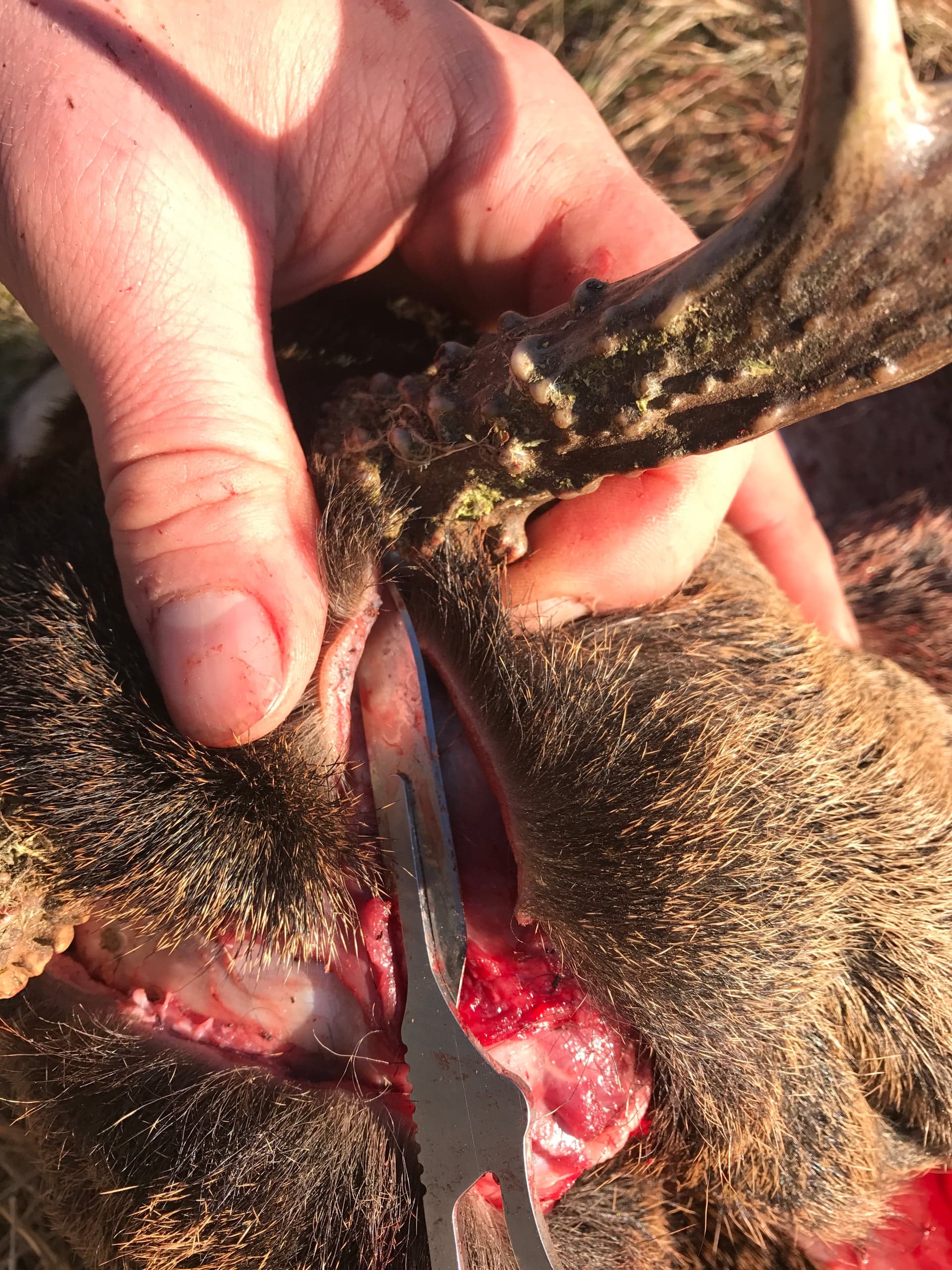
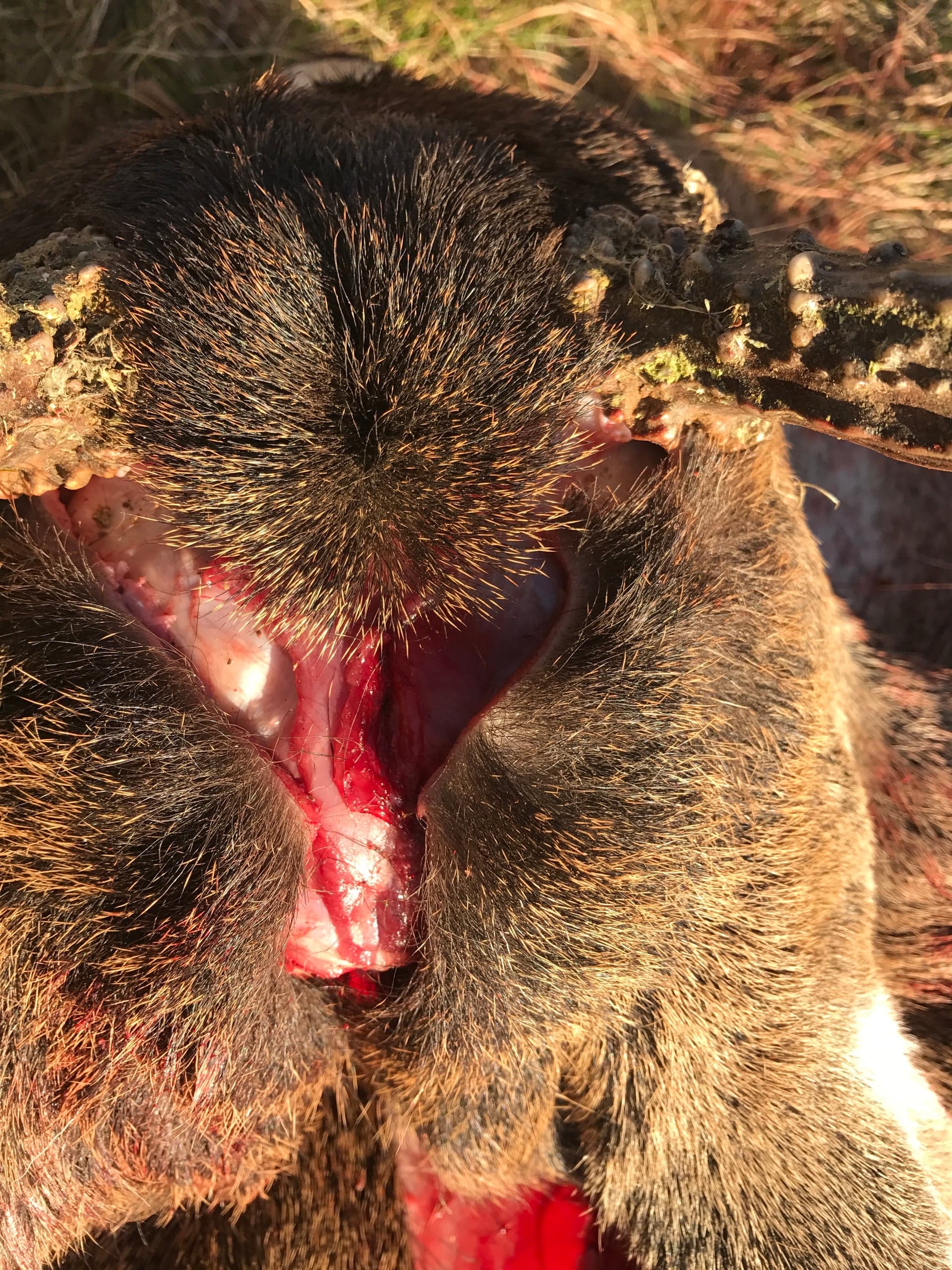
Two side-by-side photos of a deer/antlered animal's head; left shows a hand holding an antler base while a knife makes an incision along the hairline, right shows the resulting Y-shaped cut on the top of the head between the antler bases with exposed flesh.

Antler/Horn Bases

With antlers use the butt of your knife or something that is strong and blunt to pry the skin away from the base of the antlers. Horns constantly grow and will need to be cut all the way around each base in order to separate the skin from the horns.
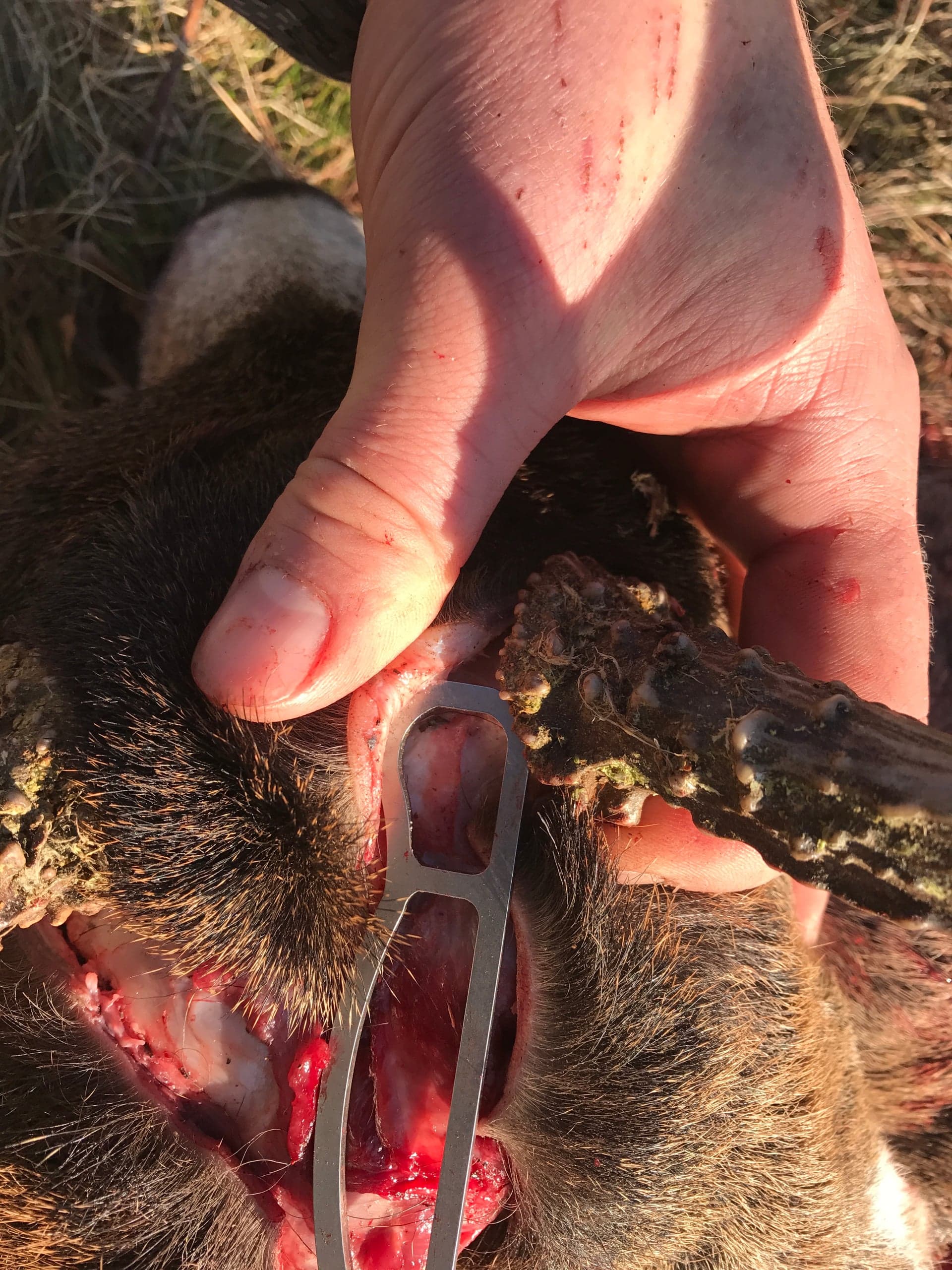
Close-up of a hand using a metal pry tool at the base of an antler/horn on a dark-haired animal's skull, working to separate skin from the base.

Skin is separated from the antlers and the Y cut is complete. Continue skinning down to the eyes.
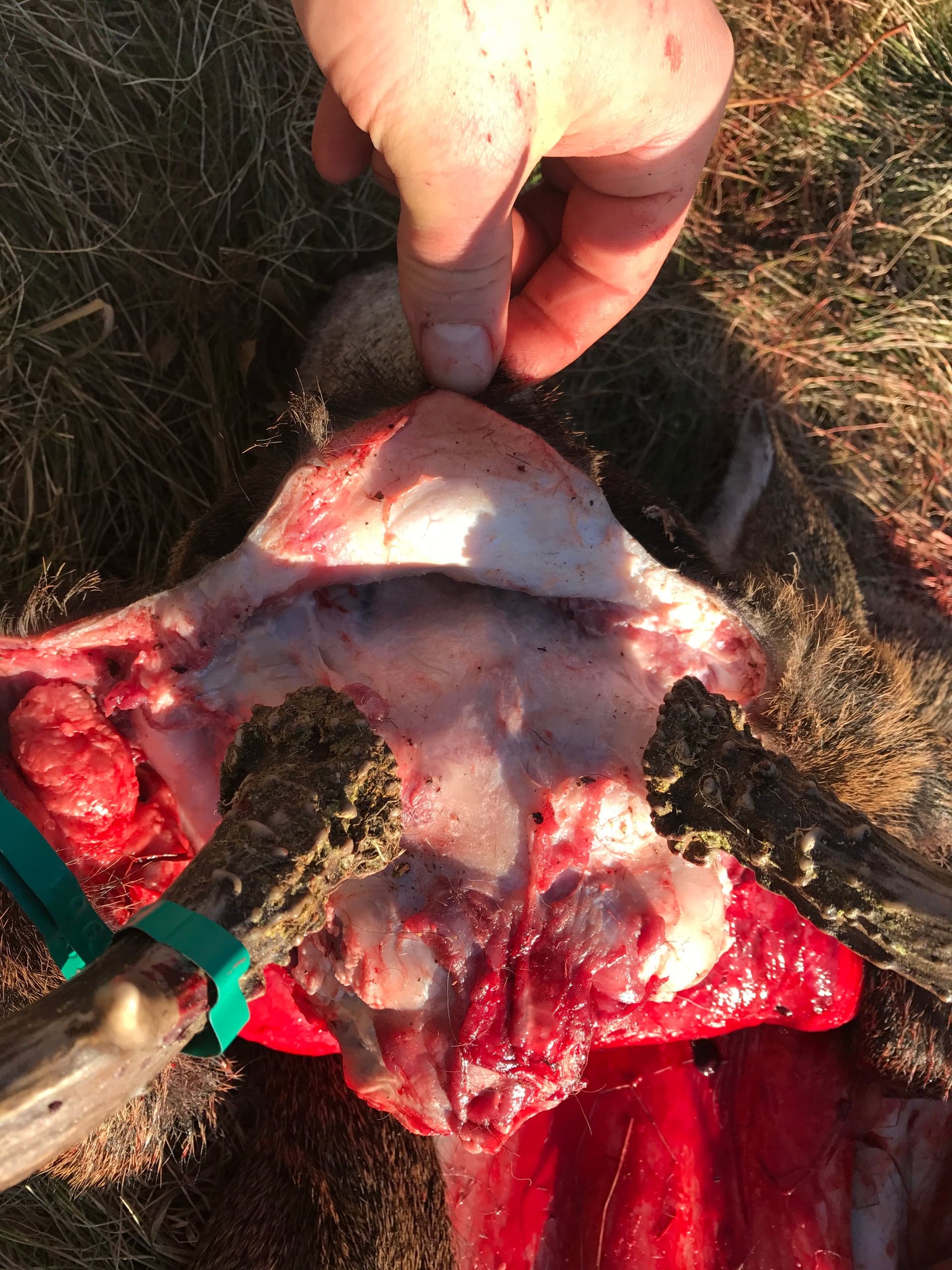
Close-up of a deer head with the skin peeled back from the skull, exposing the antler bases (burrs) and pink/white tissue between them; dry grass surrounds the carcass.

Ear Butts

To avoid mistakes, stick your fingers in the ears and feel where they connect to the skull. Cut close to the skull and separate the ears. There will be a good chunk of meat that stays with the skin. (Notice the ear canal hole on the right side of the picture)
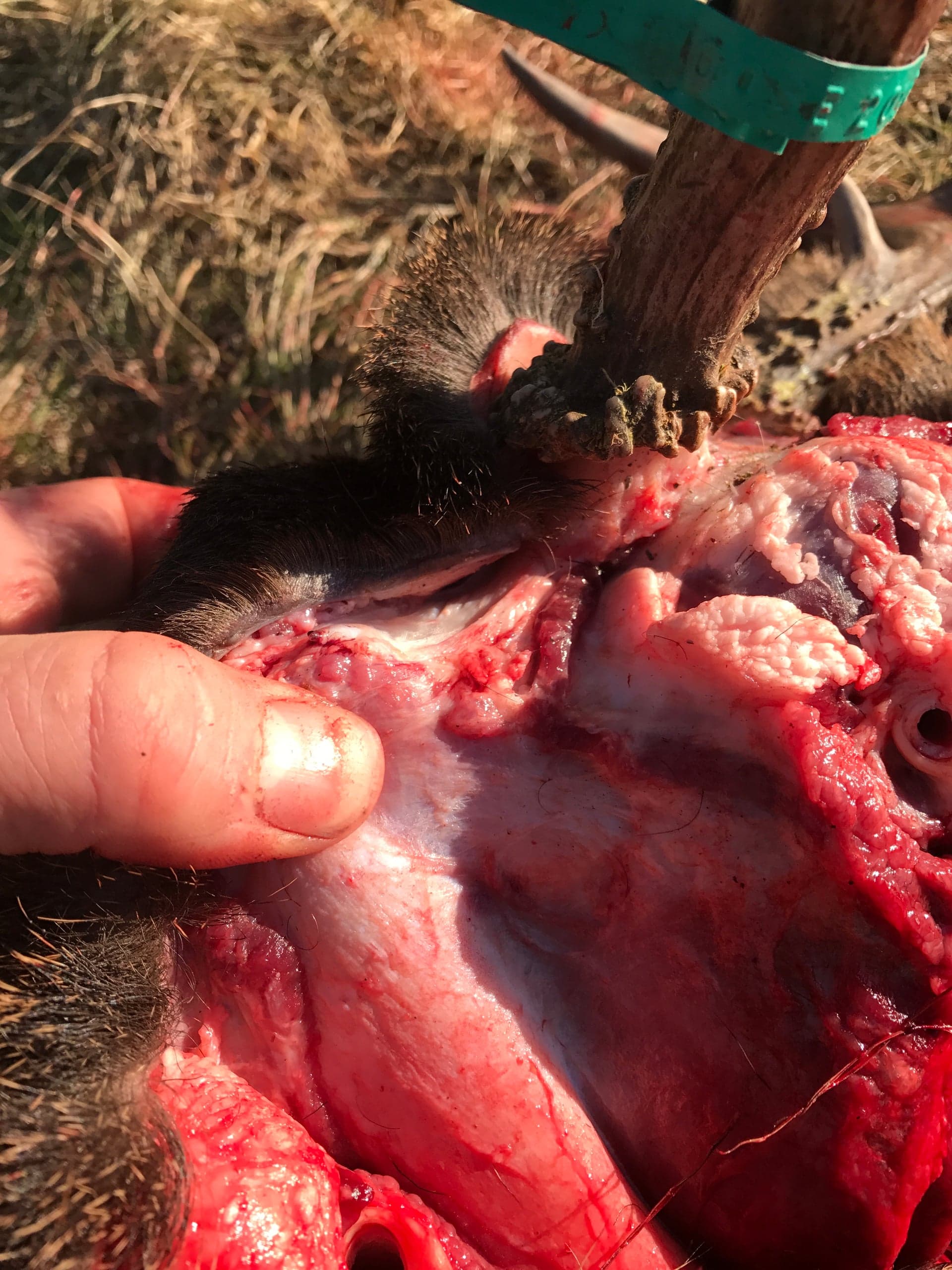
Close-up of a deer head being skinned, showing a hand pulling back the cape near the antler base to expose the ear butt and ear canal opening, with raw red flesh visible.

Lip Line

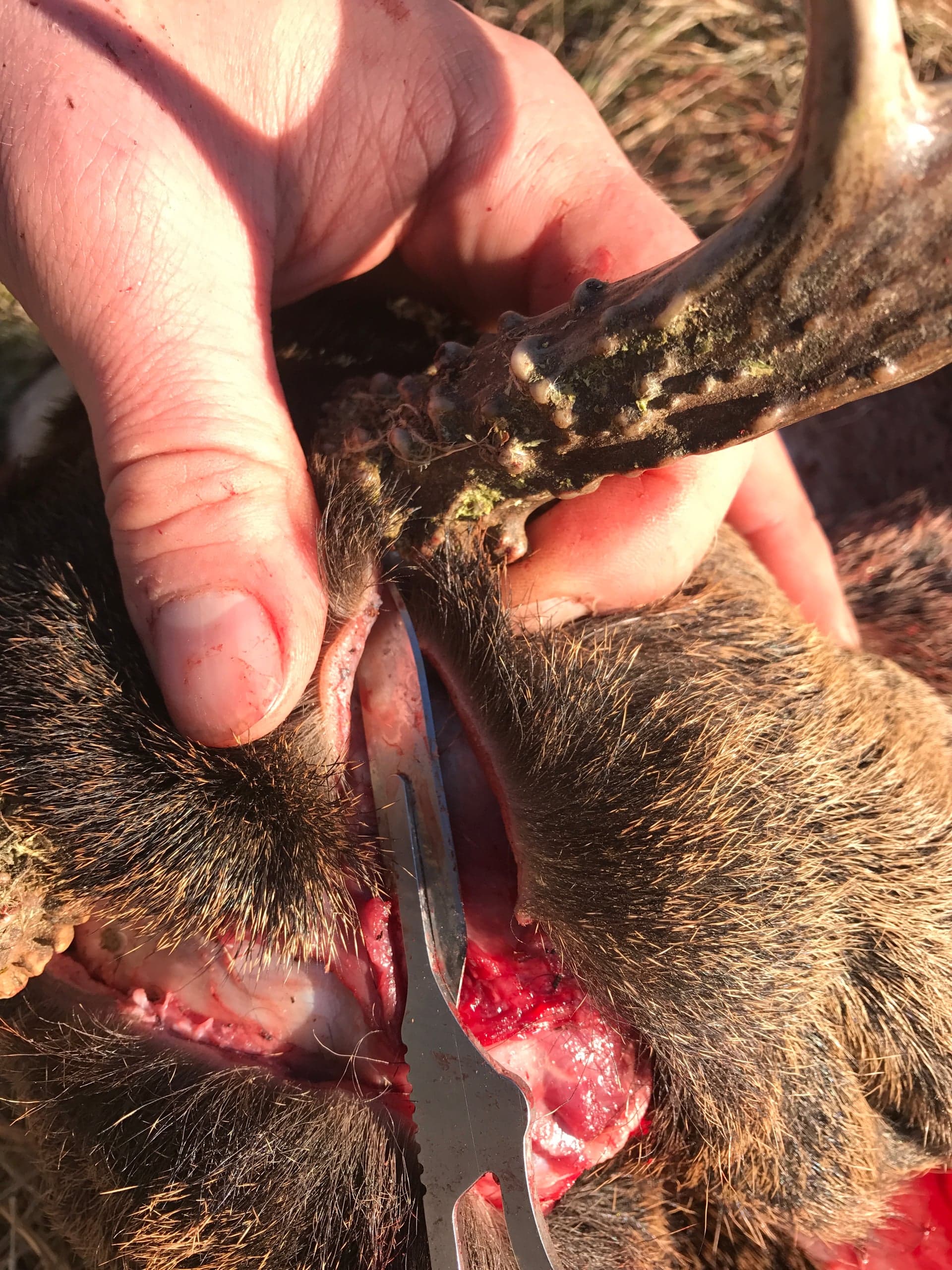
Here we separate the lips from the skull. Open the animal's mouth and make your cuts as close to the teeth or pad as you can, leaving as much lip attached to the skin as possible. Cut all the way around the mouth where you can see, do not cut the corners of the mouth at this time.
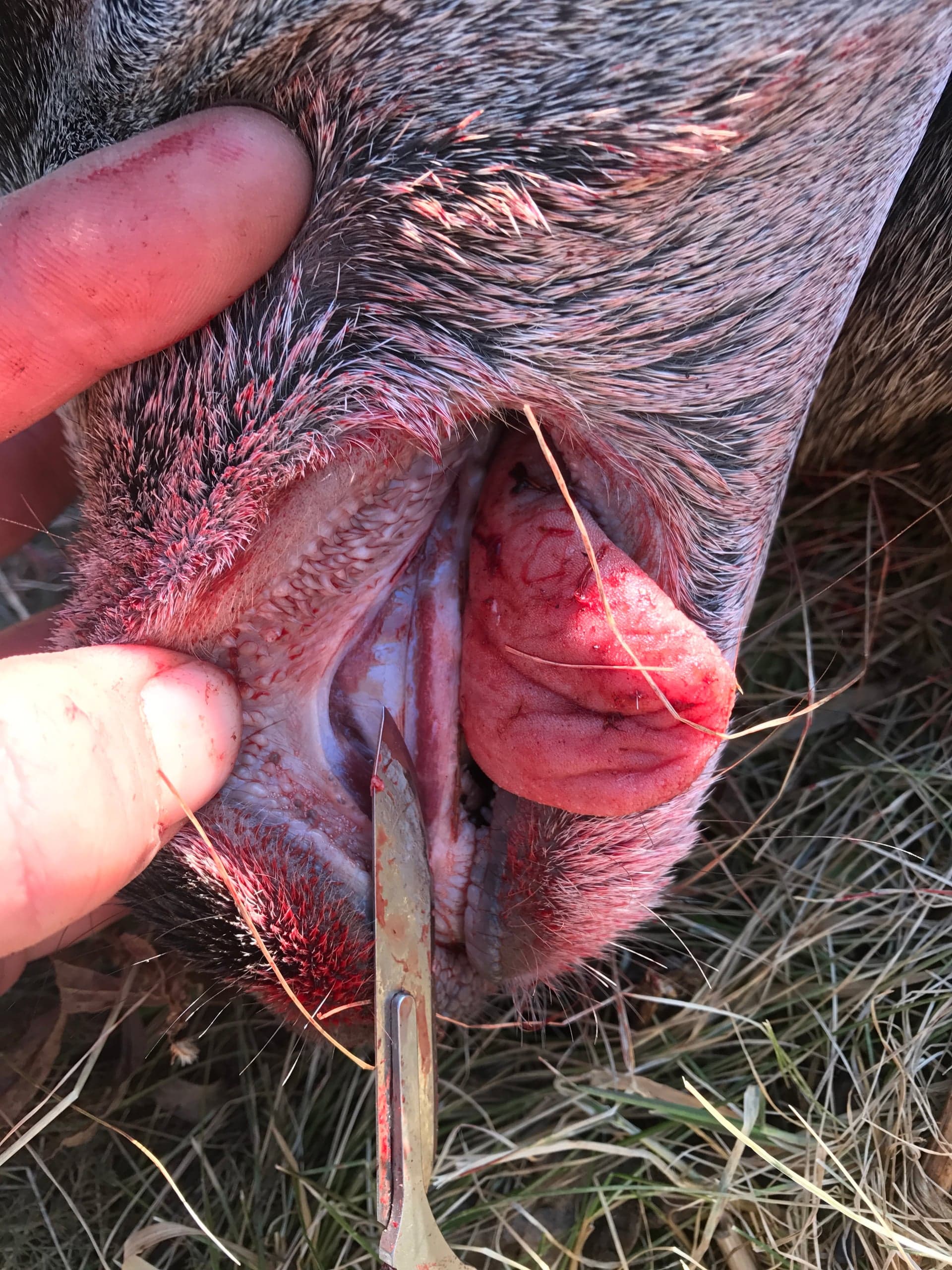
Close-up of an animal's mouth held open by a hand, with a scalpel cutting along the lip line near the teeth and gum pad; gray hair around the muzzle and dry grass in the background.

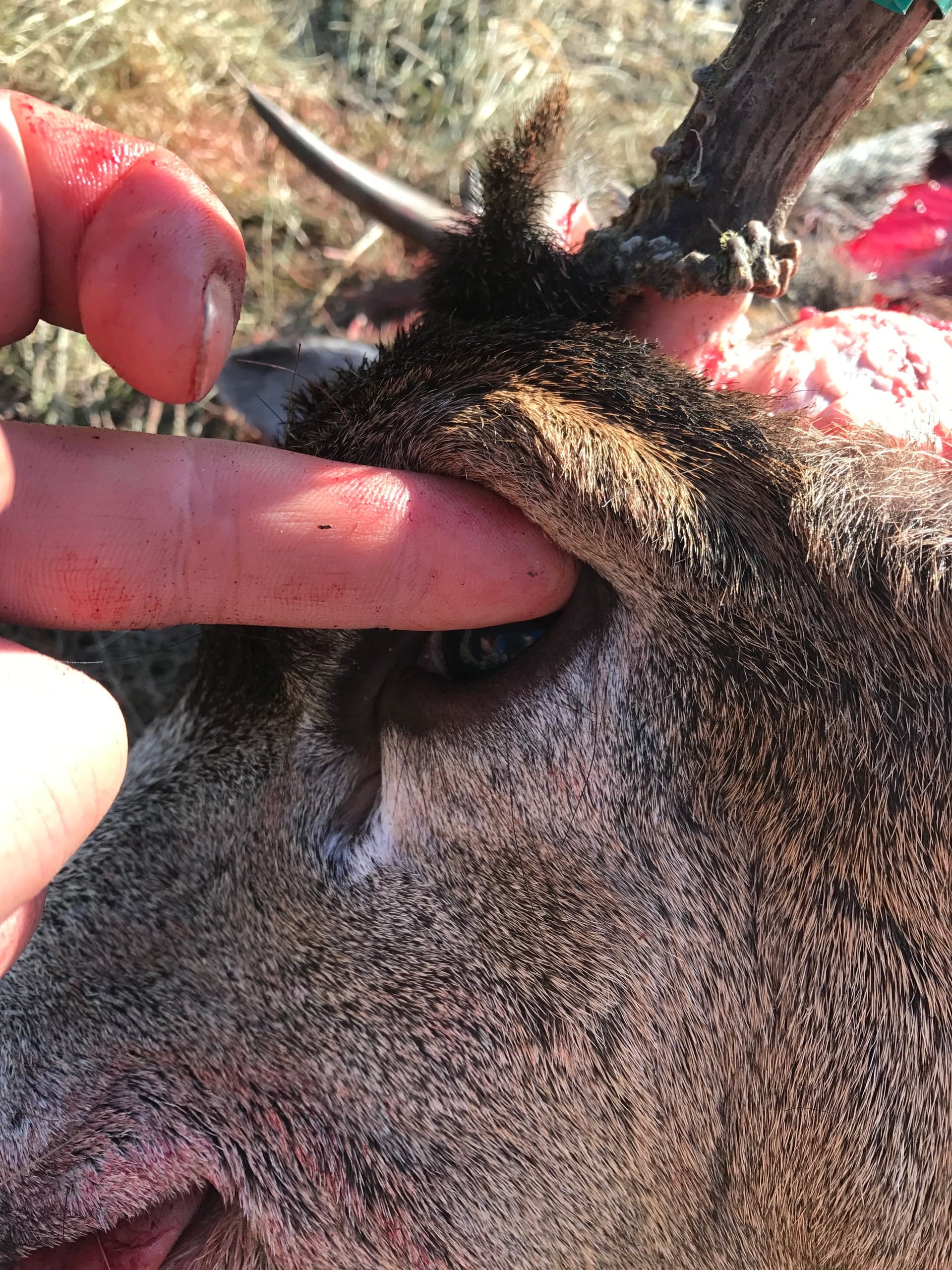
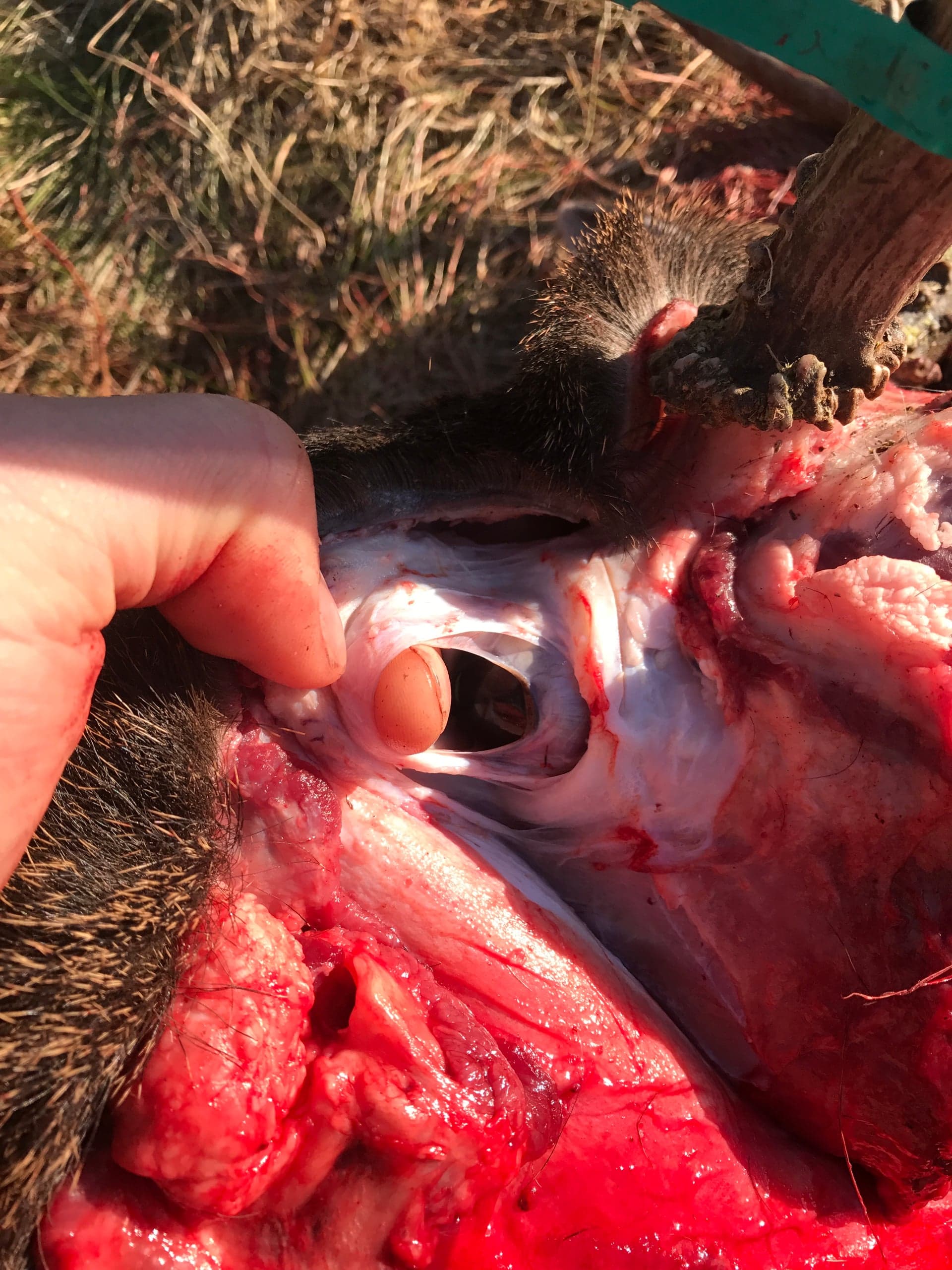
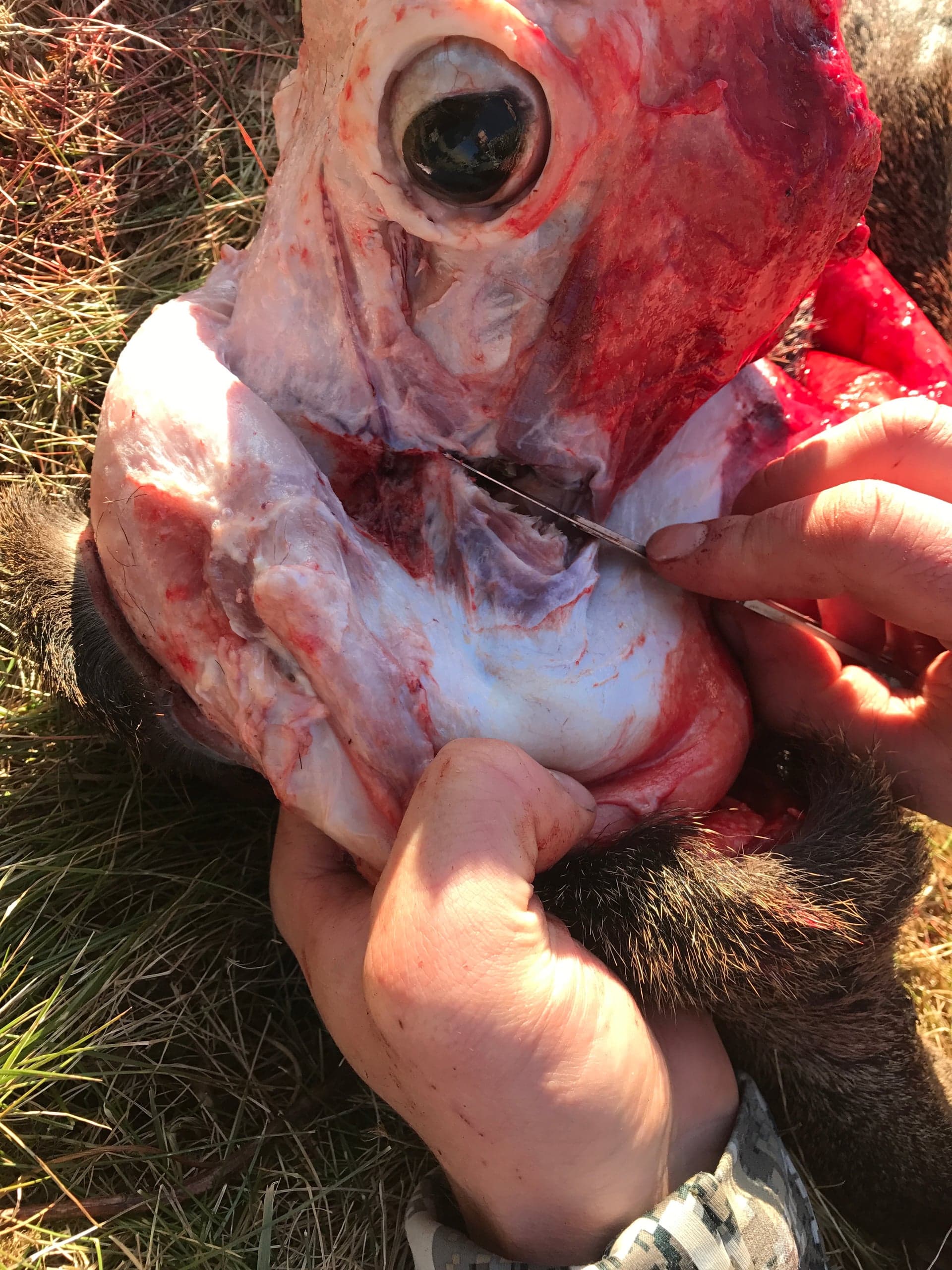
Eyes

Two side-by-side photos. Left: a fingertip presses against the closed eyelid of a deer head, indicating the location of the eye through the hide. Right: from the underside of the cape, a finger pokes through the bony eye socket of the partially skinned skull, with red muscle tissue and white connective tissue visible around the orbit.
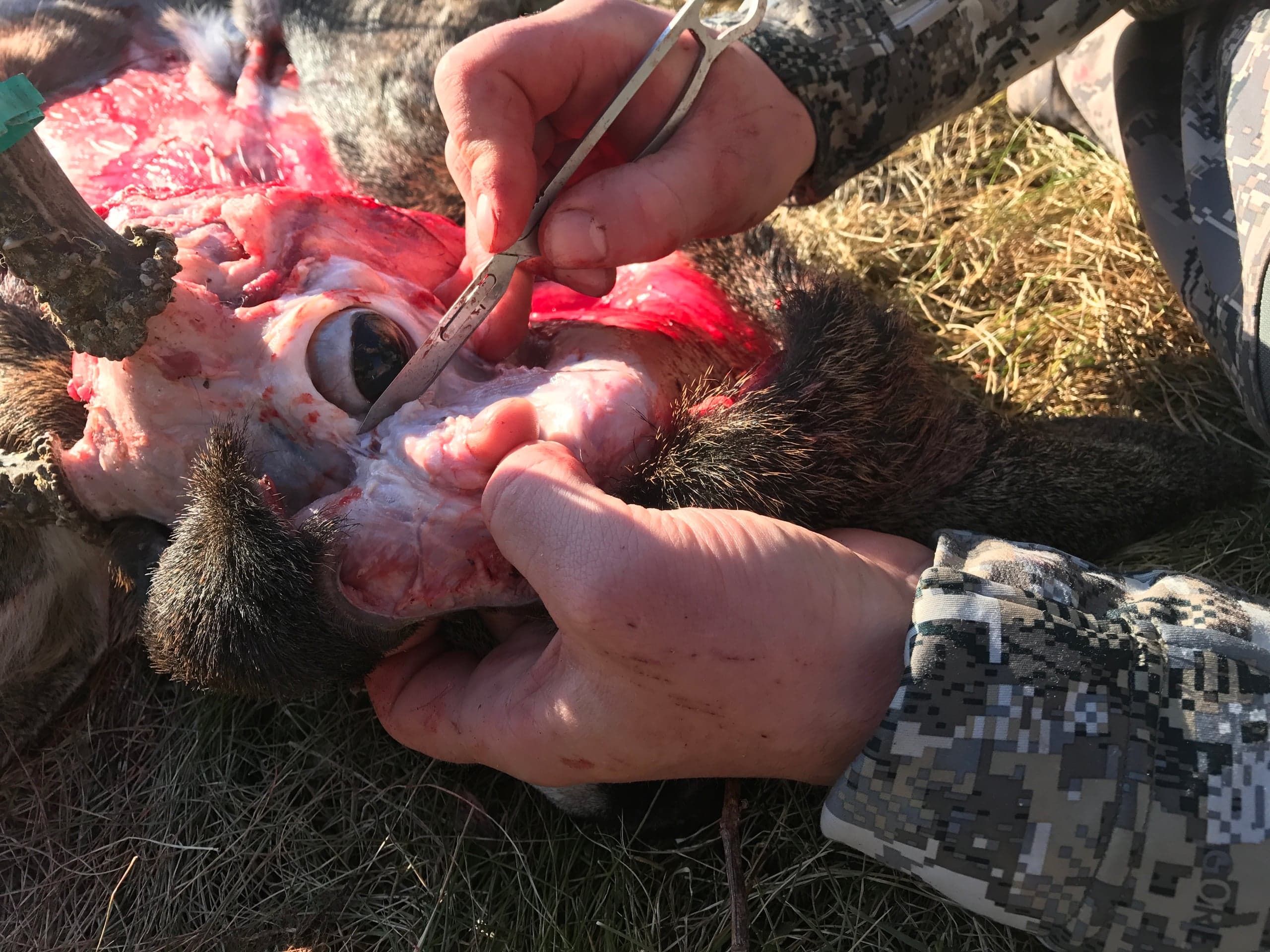
Close-up of a deer head on the ground with the cape pulled back, exposing the eye socket; one hand holds the skin while the other uses scissors to cut around the pre-orbital gland area below the eye. A camouflage sleeve is visible.
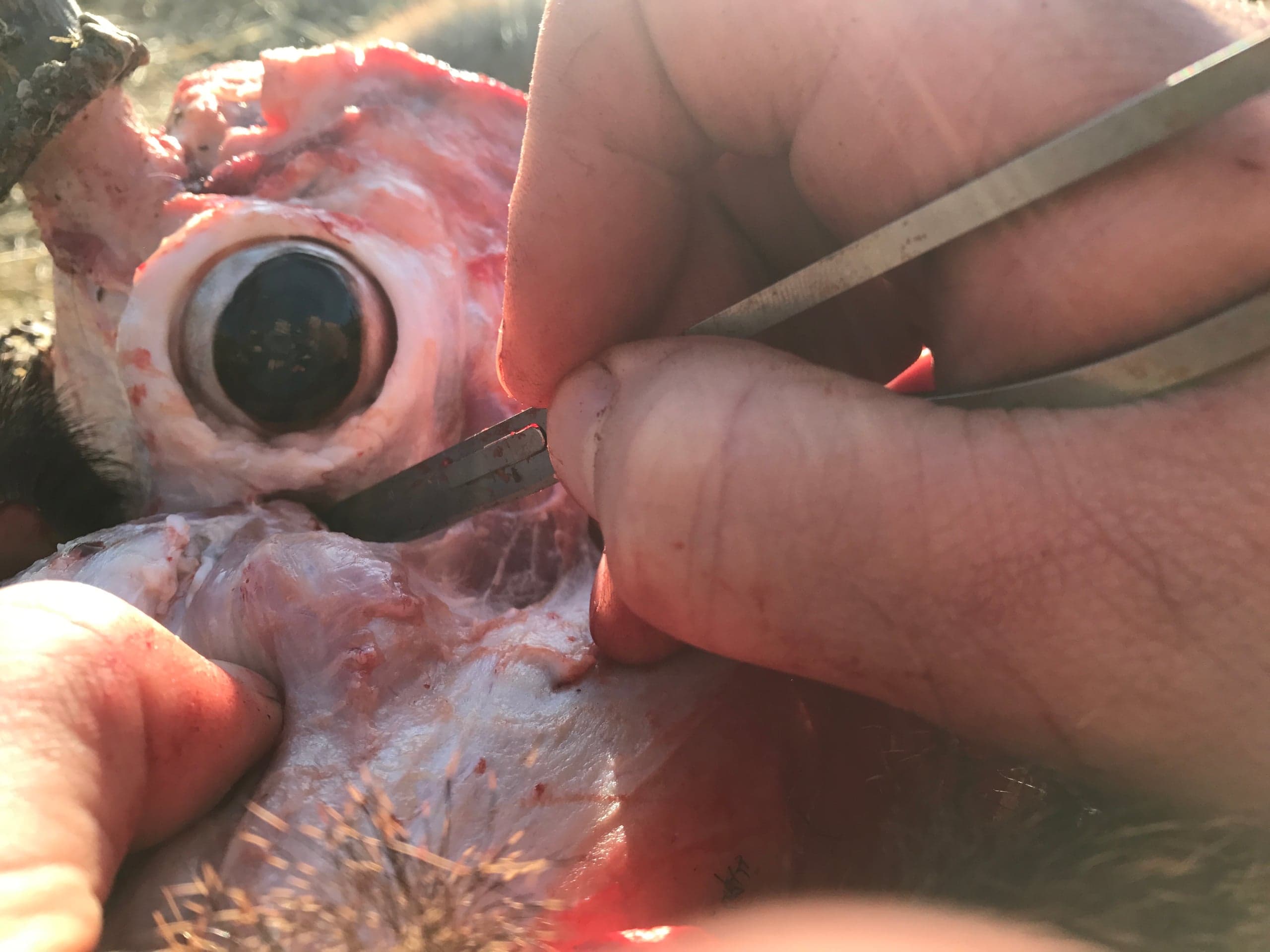
Close-up of hands using a small knife blade to carefully separate skin and connective tissue around the exposed eye of a caped animal skull, with the eyeball intact in the socket.

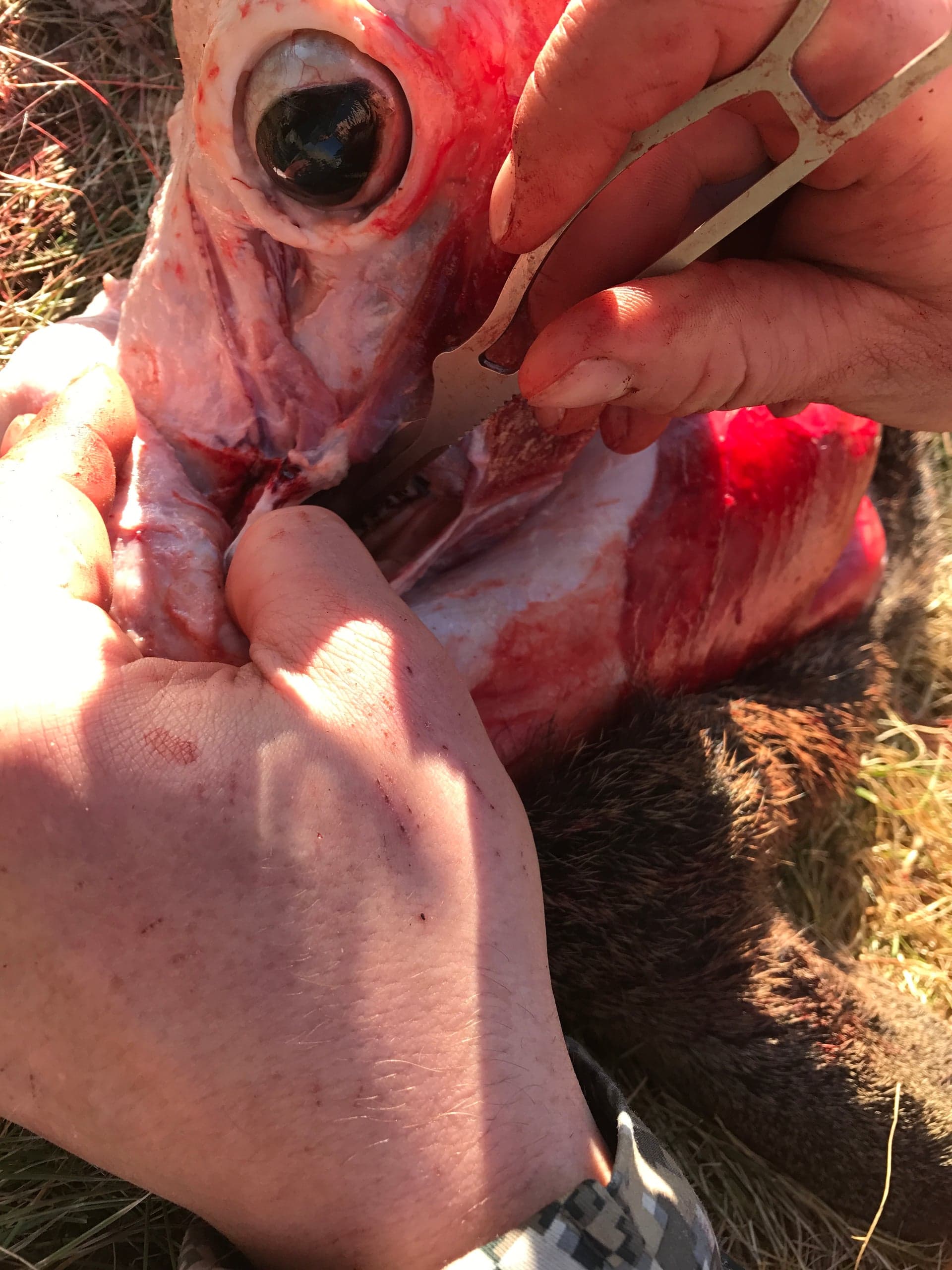
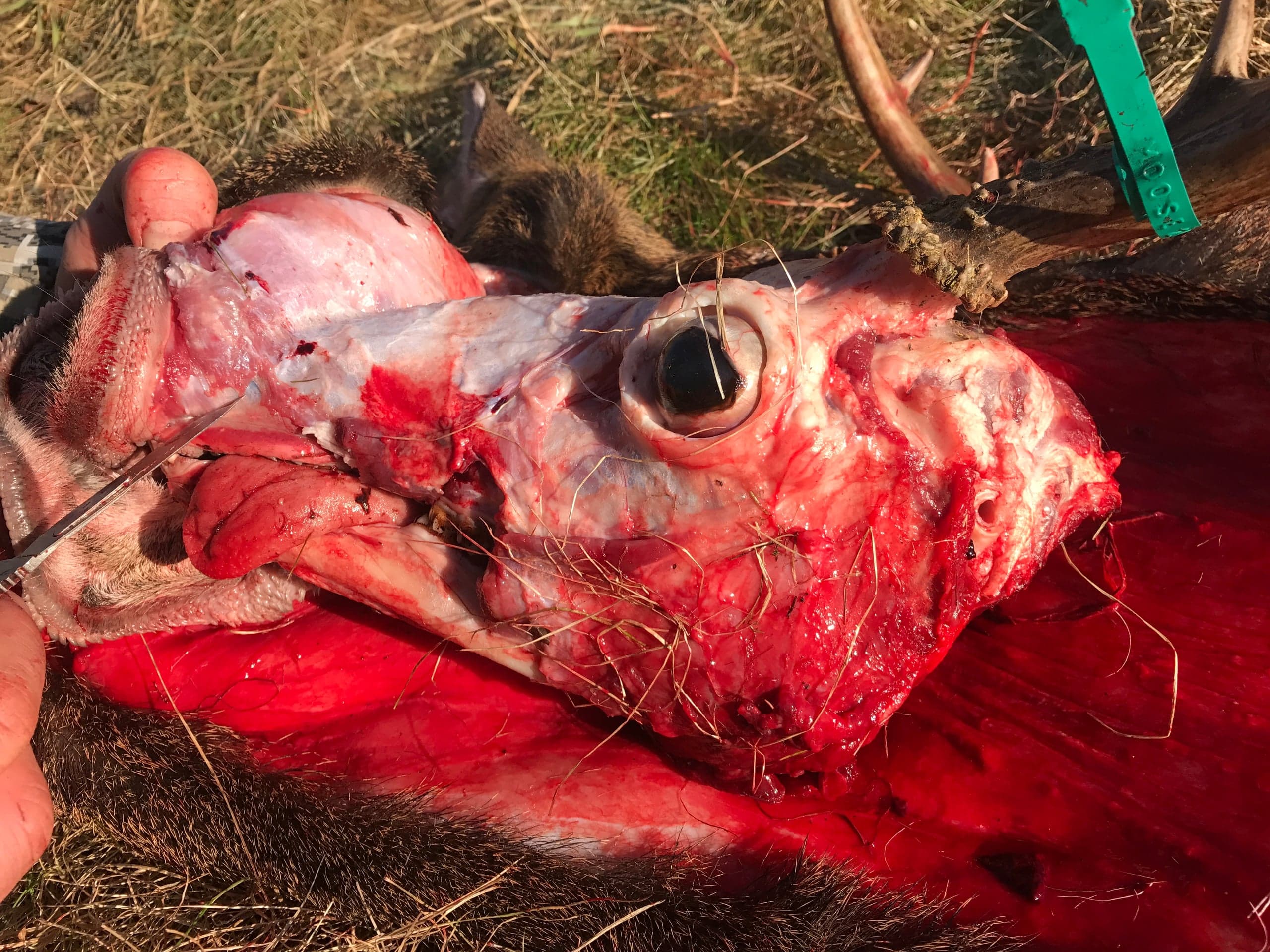
Corners of the Mouth

Close-up of a partially skinned deer head on grass, showing the exposed eye socket area and white connective tissue around the muzzle; one hand grips the cape while the other uses a knife to cut along the lower jaw.
Close-up of hands using a small skinning blade to cut carefully around the exposed eyeball of a caped animal, with the eye membrane and surrounding tissue visible.
Close-up of a partially skinned deer/moose head lying on a blood-soaked surface; the hide has been peeled back exposing white connective tissue around the skull, the eye socket with the eyeball still in place, and the tongue protruding from the jaw. A knife blade is visible at the lower jaw making a cut, a hand steadies the head at upper left, and a green tag (partially reading "MOOSE") hangs from an antler at the upper right.

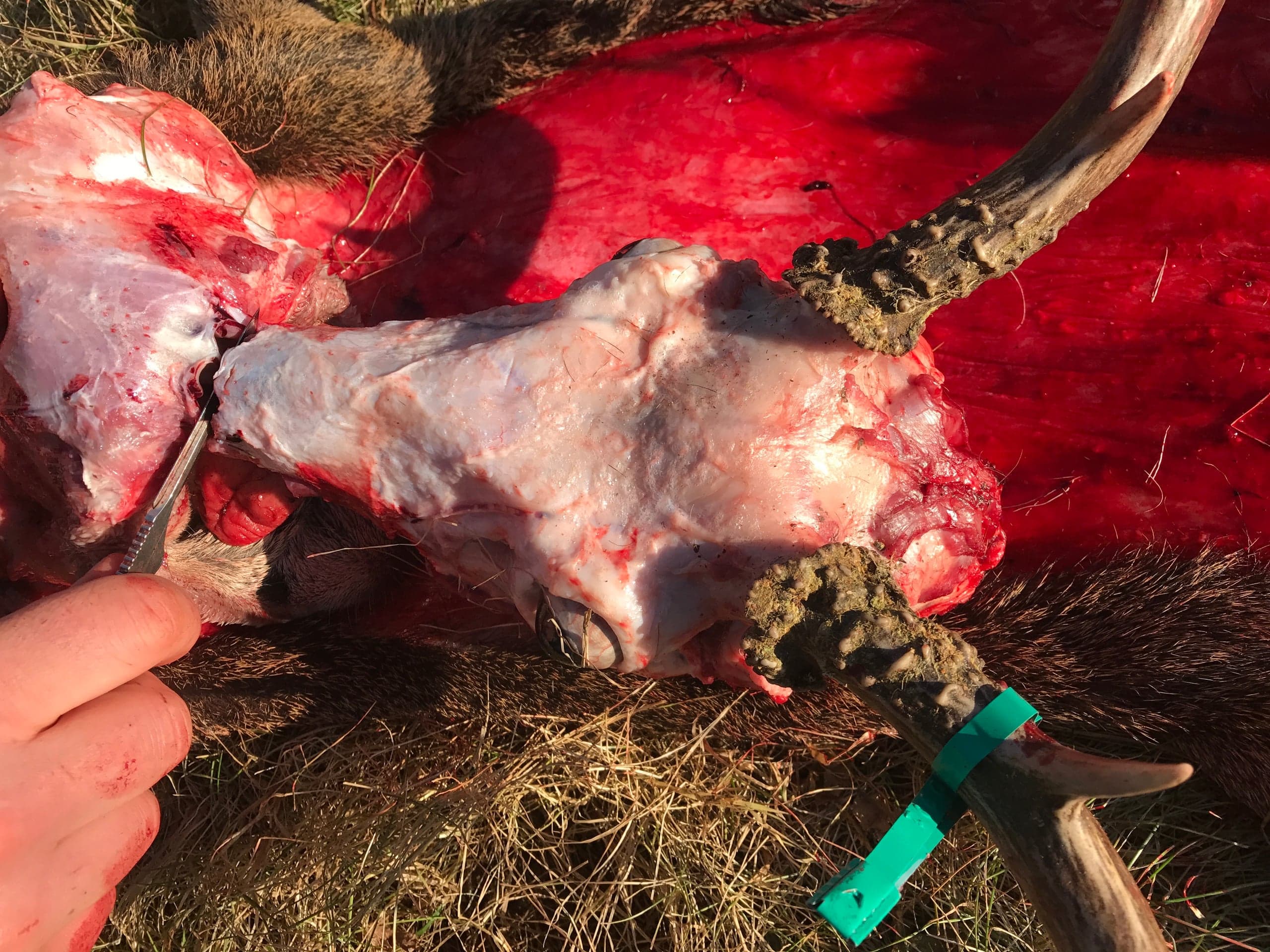
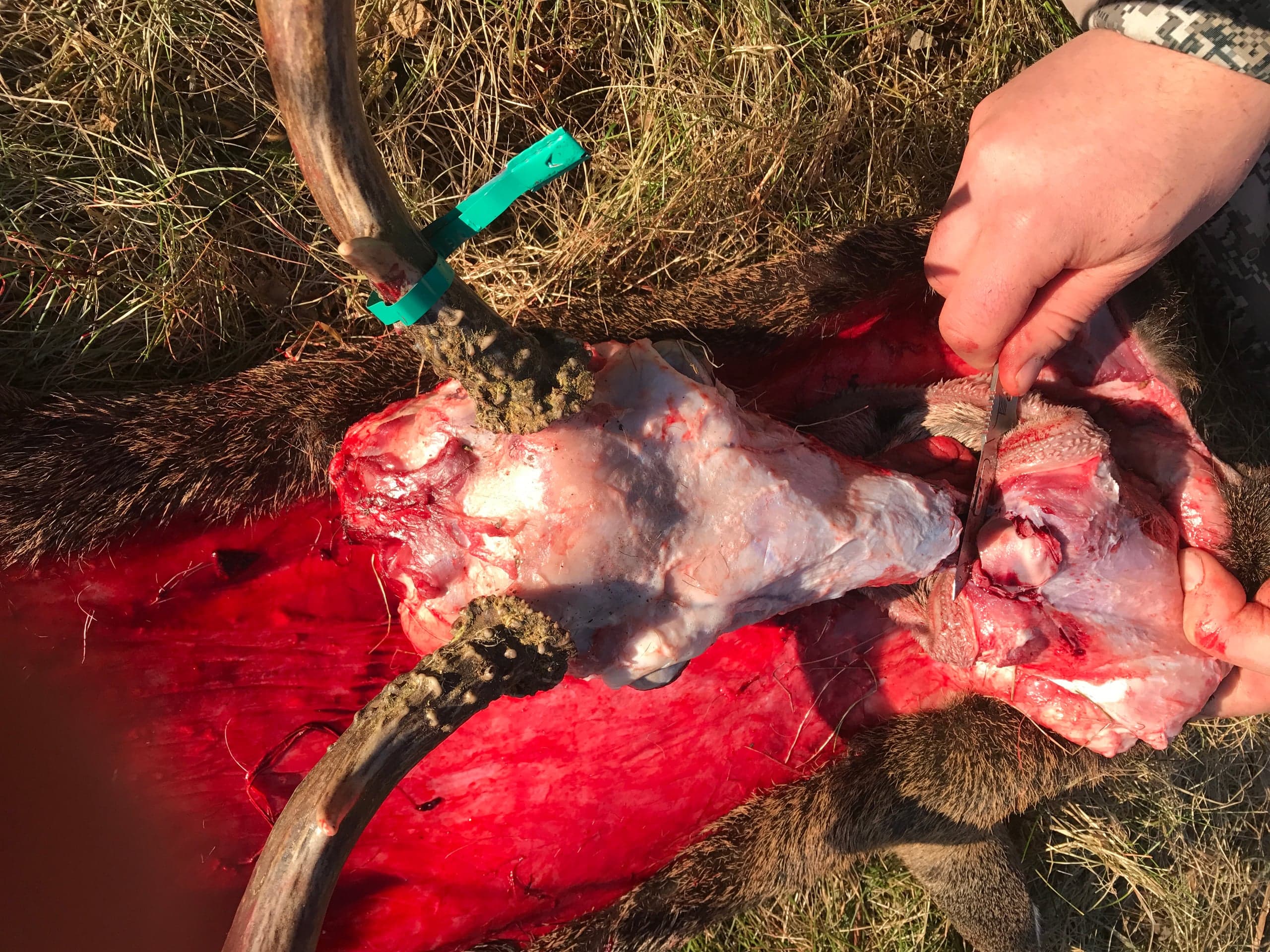
The Nose

Close-up of a skinned deer skull on a red surface, with exposed white skull bone, antler bases still attached, and a hand holding a scalpel cutting near the antler pedicle; a green tag is visible on the antler tine.
Overhead view of a deer/elk head being skinned, showing exposed white skull cap and forehead with bloody tissue, one antler base wrapped in a green tag visible at upper left, hands on the right using a knife to separate the cape from the skull over grass.

Good Luck on Your Trips!

WILD REFLECTIONS Chugiak, AK
More from the Bench

Other articles

Browse the rest of the field guide — straightforward, studio-grade taxidermy notes from Grant.