Field Guide·April 30, 2026

Skinning a Cape in the Field

Body cuts for caping a trophy in the field — back cut, leg rings, and removing the cape from the body up to the base of the head, before head work begins.

Grant Gullicks
Grant GullicksFounder · Master Taxidermist · Wild Reflections
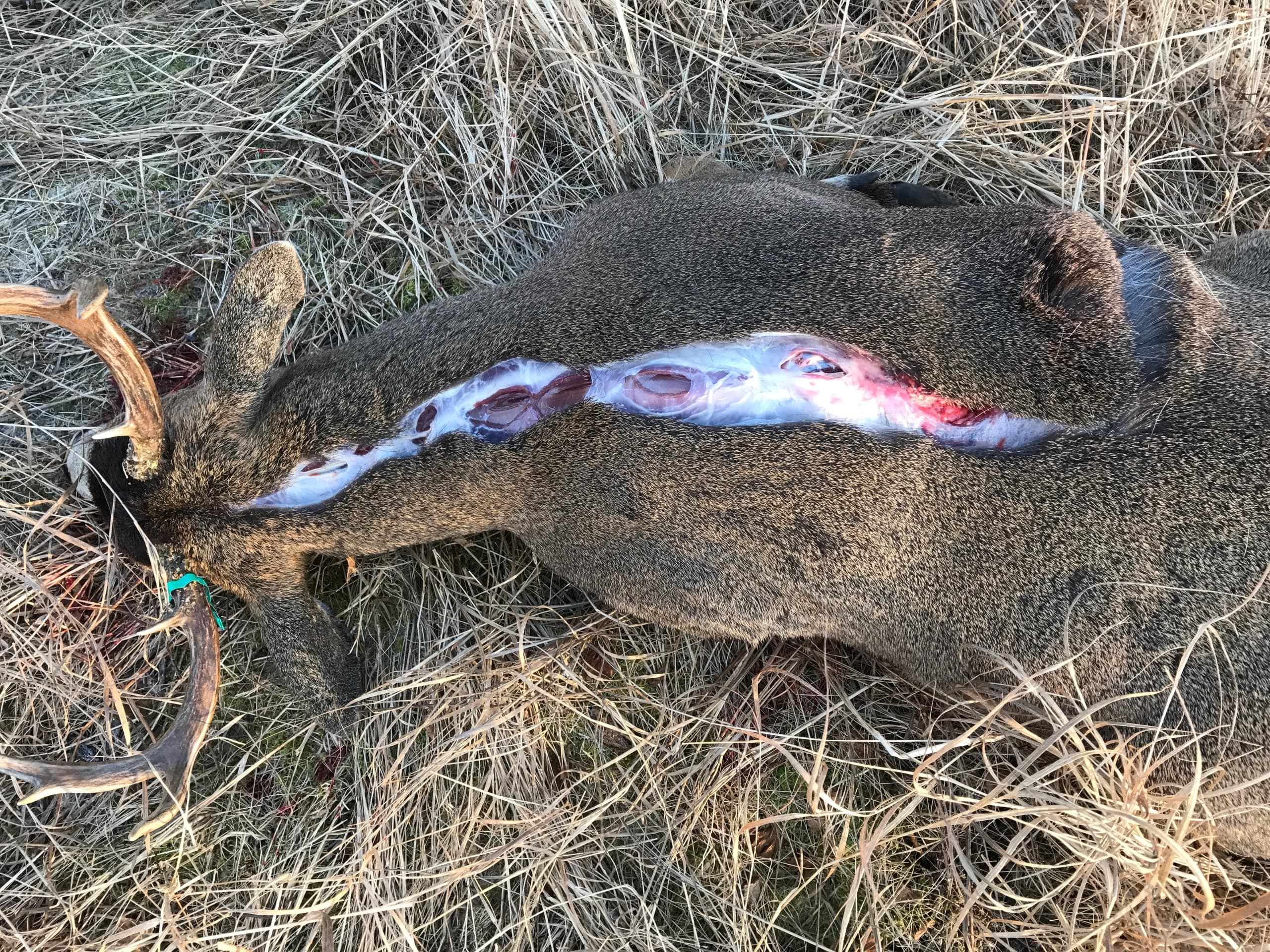
Antlered deer lying on dry grass with a long straight incision running down the center of the back of the neck

Skinning Tips

  1. Always cut up from the underside of the skin out towards the hair. DO NOT cut down through the hair to the skin. This cuts hairs and damages the cape.
  2. Follow the hair patterns. The hair grows together from opposite directions and gives you the lines to follow when cutting.
  3. Use your fingers to feel around the difficult areas.
  4. Skin the cape clean, making sure not to leave a lot of fat and meat attached to the skin. This will save you from having to go back and flesh the cape later in camp.

1st Cut

Made straight down the back of the neck directly in the center. Extend the cut down the back until it is even with the last two (2) ribs of the rib cage.
Antlered deer lying on dry grass, viewed from above, with a long straight incision running down the center of the back of the neck exposing pale subcutaneous tissue and some red flesh.

2nd Cut

Level with the second to last rib in the rib cage, make a cut all the way around the body.
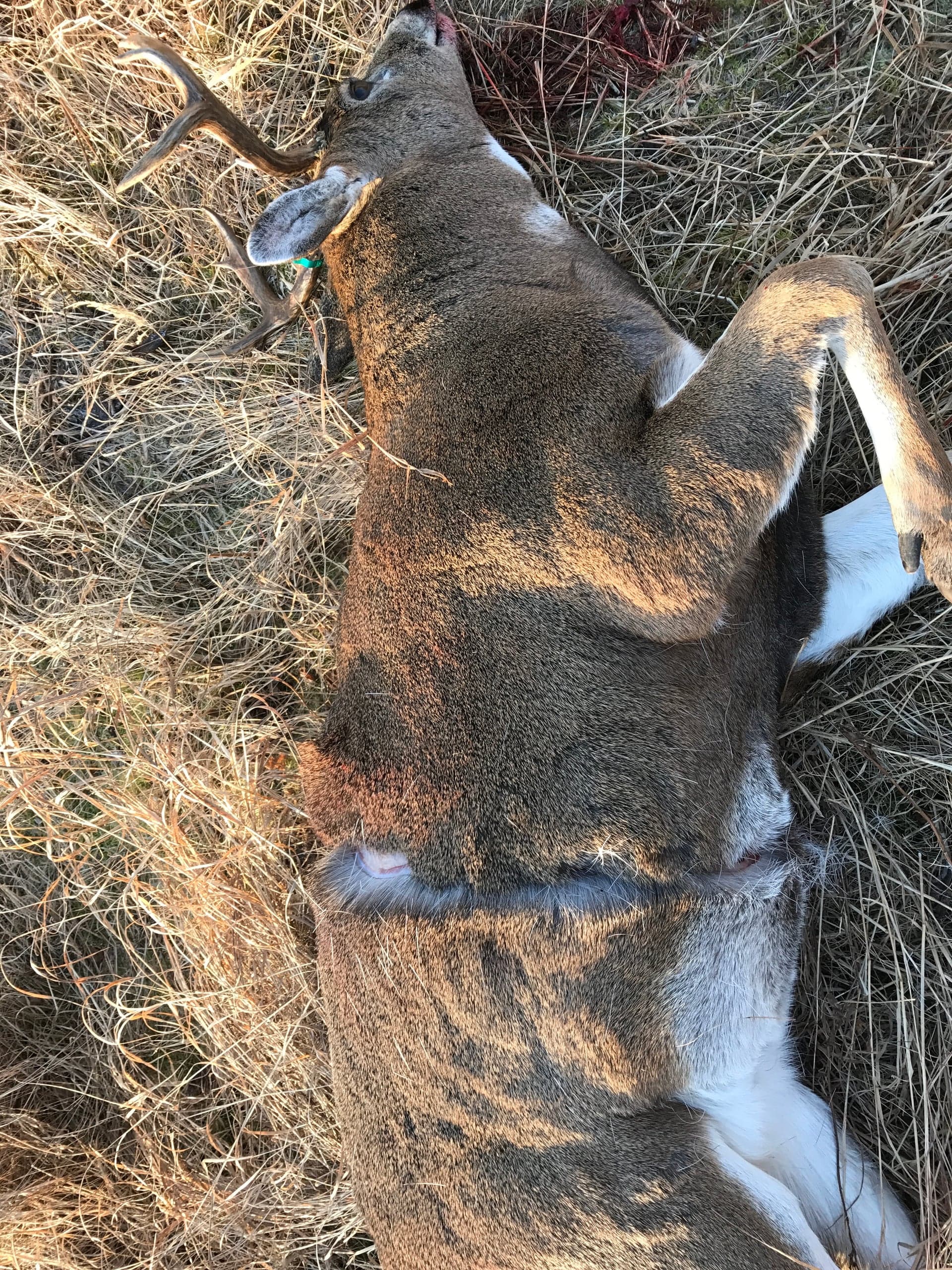
Whitetail buck lying on its side in dry grass, with a circumferential cut visible around the body behind the front shoulder area.

3rd Cut

Make a circular cut around the leg just below the knee joint. Make a cut following the hair line on the back of the leg, over the elbow, and along the side of the armpit (DO NOT cut into the arm pit). Extend the cut straight back towards the butt, connecting with cut number 2.
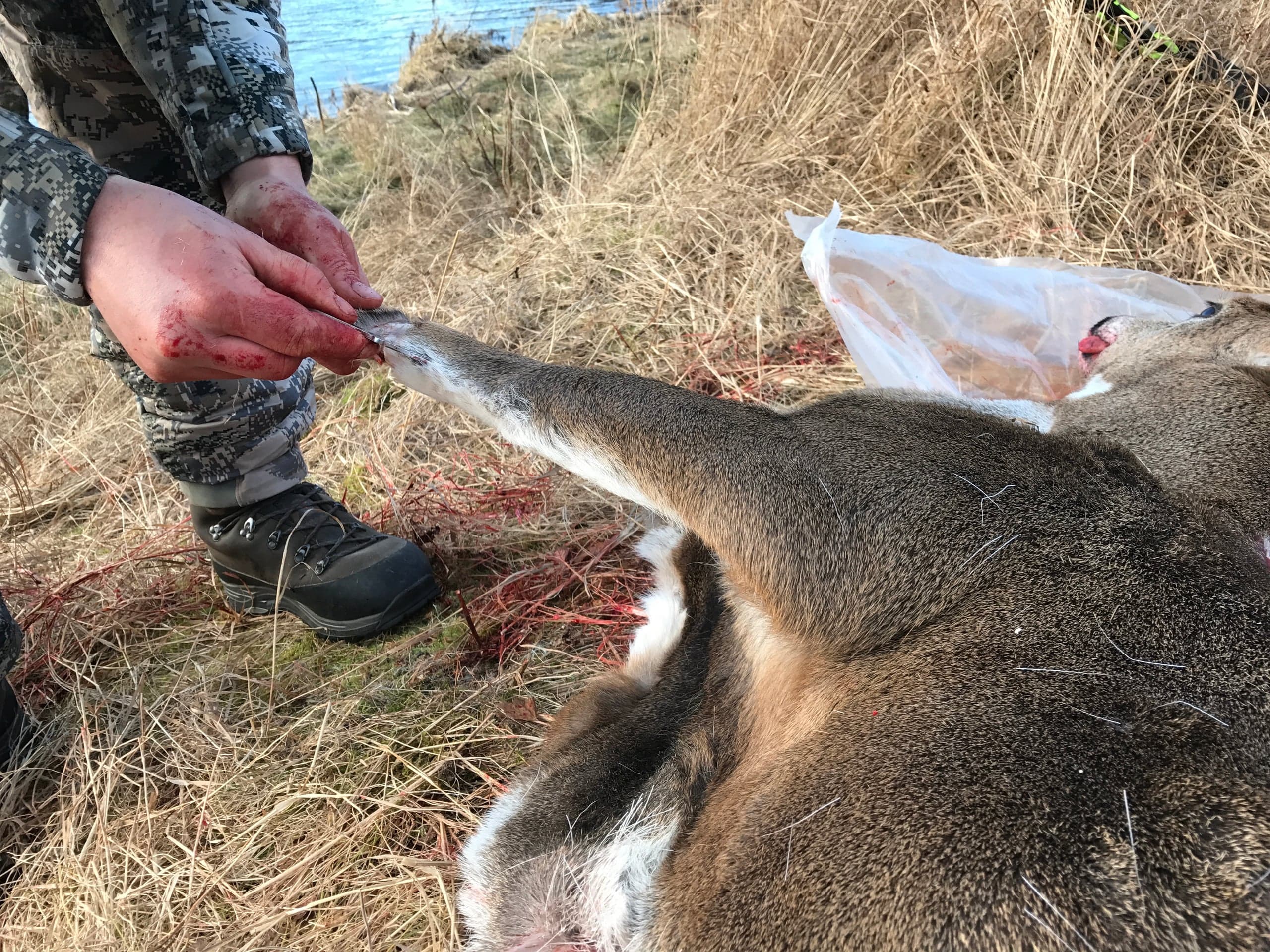
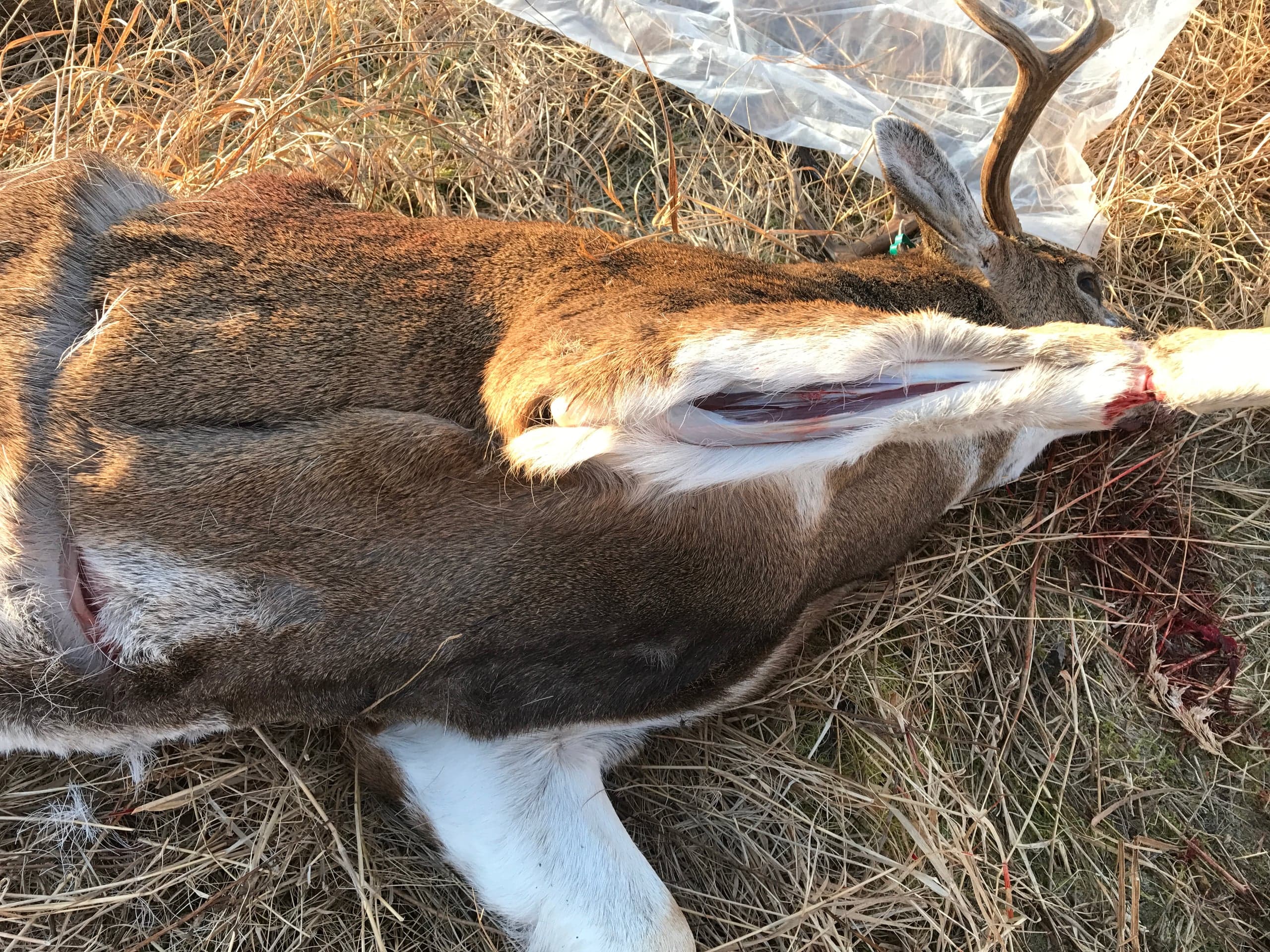
Hunter in camouflage gripping the lower foreleg of a deer carcass lying on dry grass near water; a white plastic bag is visible behind the deer.
Whitetail buck lying on dry grass with a fresh incision running along the underside of the front leg/brisket, antler and ear visible at right, plastic tarp in background.

The cuts for the cape have been made. Skin the cape away from the body all the way up to the base of the head.
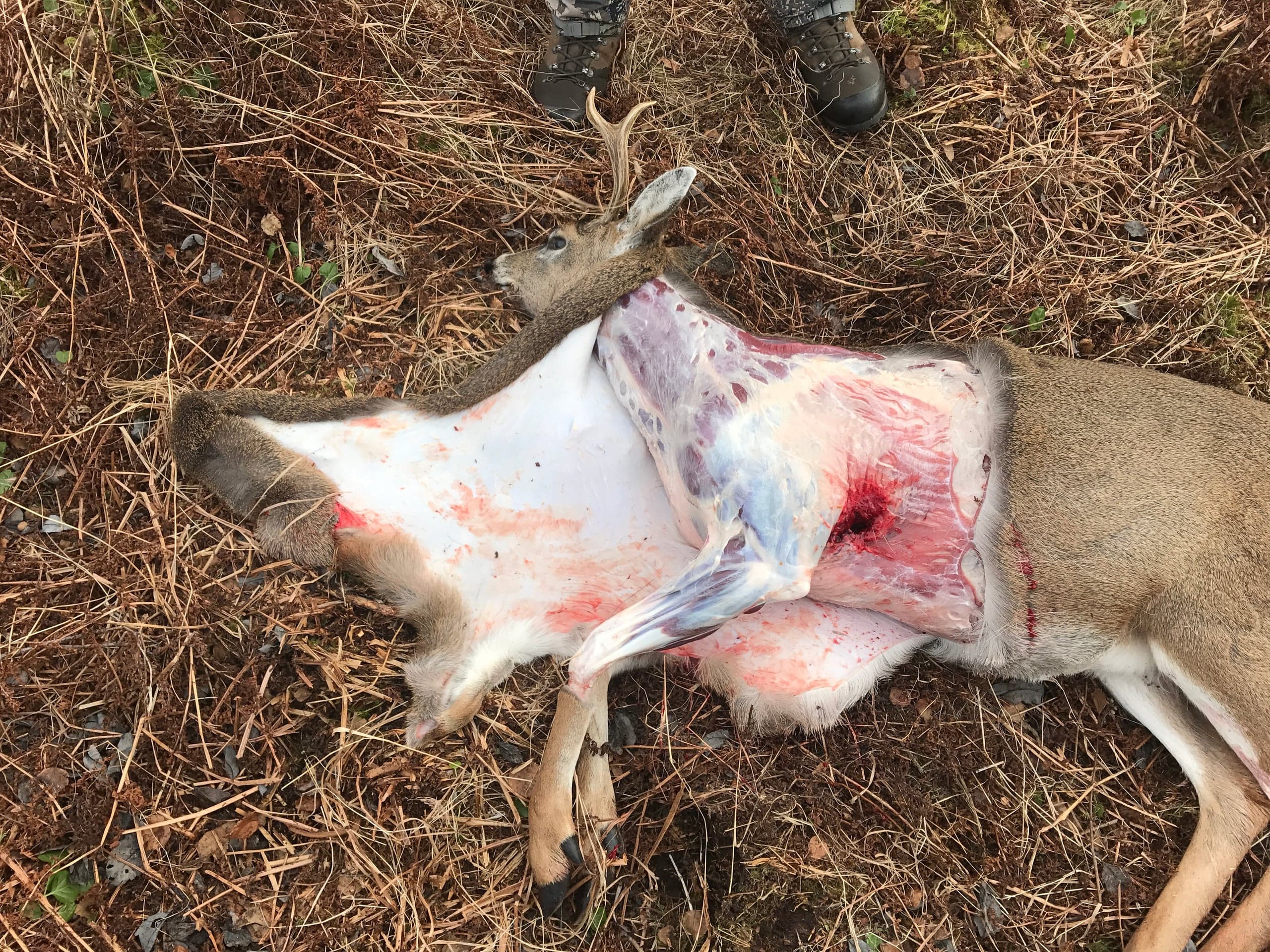
Field photo of a deer lying on dry grass and forest debris, with the cape skinned back from the body up toward the base of the head, exposing the underlying carcass; a hunter's boots are visible at the top of the frame.

Repeat the steps for the 3rd cut on the opposite leg.
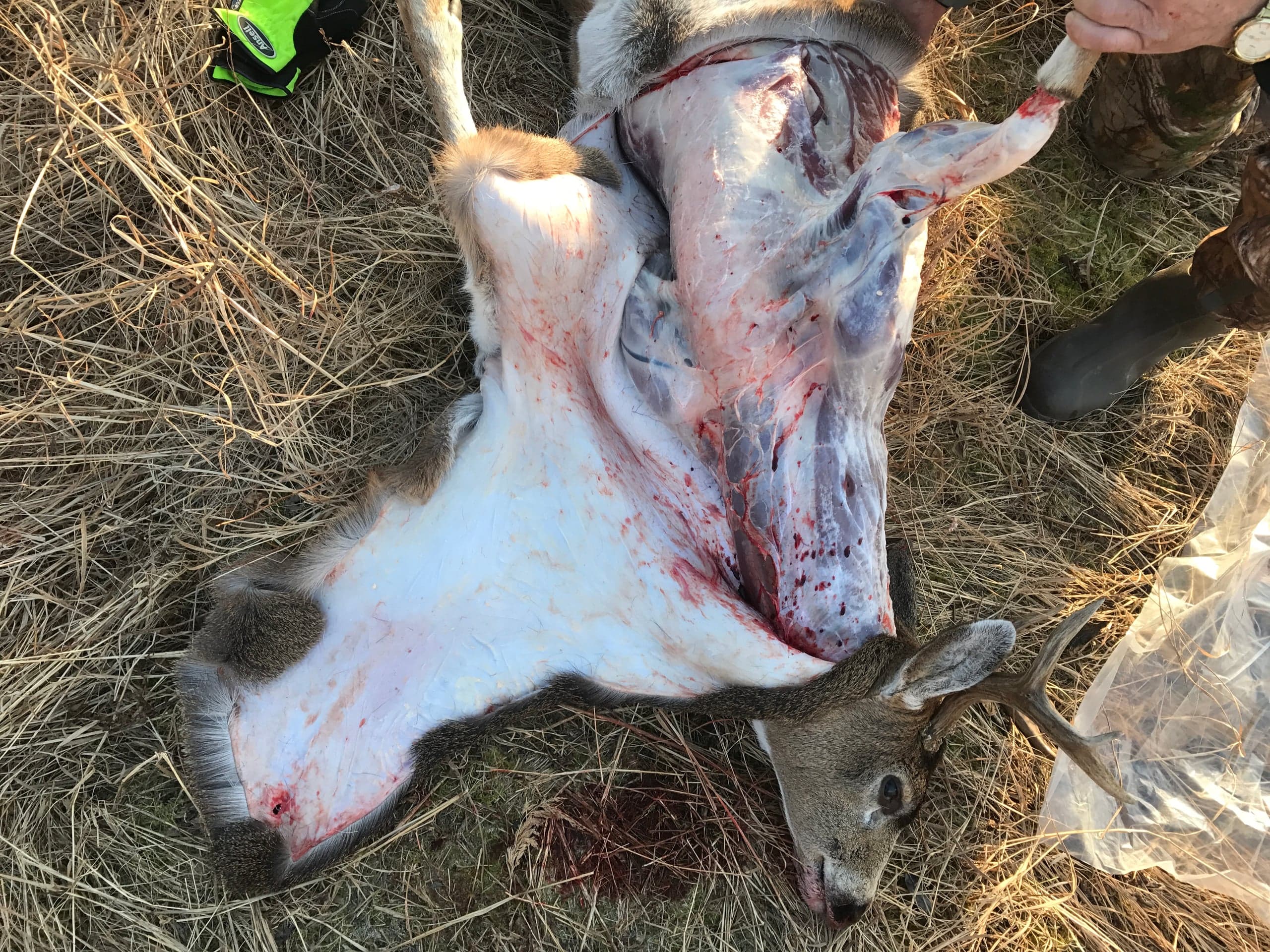
Overhead view of a deer carcass laid on dry grass, with the hide partially skinned back from the body and rear legs, exposing the inner side of the cape; the deer's antlered head rests at the lower right next to a plastic bag, and a person's boot is visible at the right edge.

Removing the Head

Find where the head connects to the spine. Make a circular cut around the base of the head all the way down to the bone, separating all soft tissue. Be cautious not to cut the cape. Once the soft tissue is separated grab the head and twist. The head will twist off and separate from the neck.
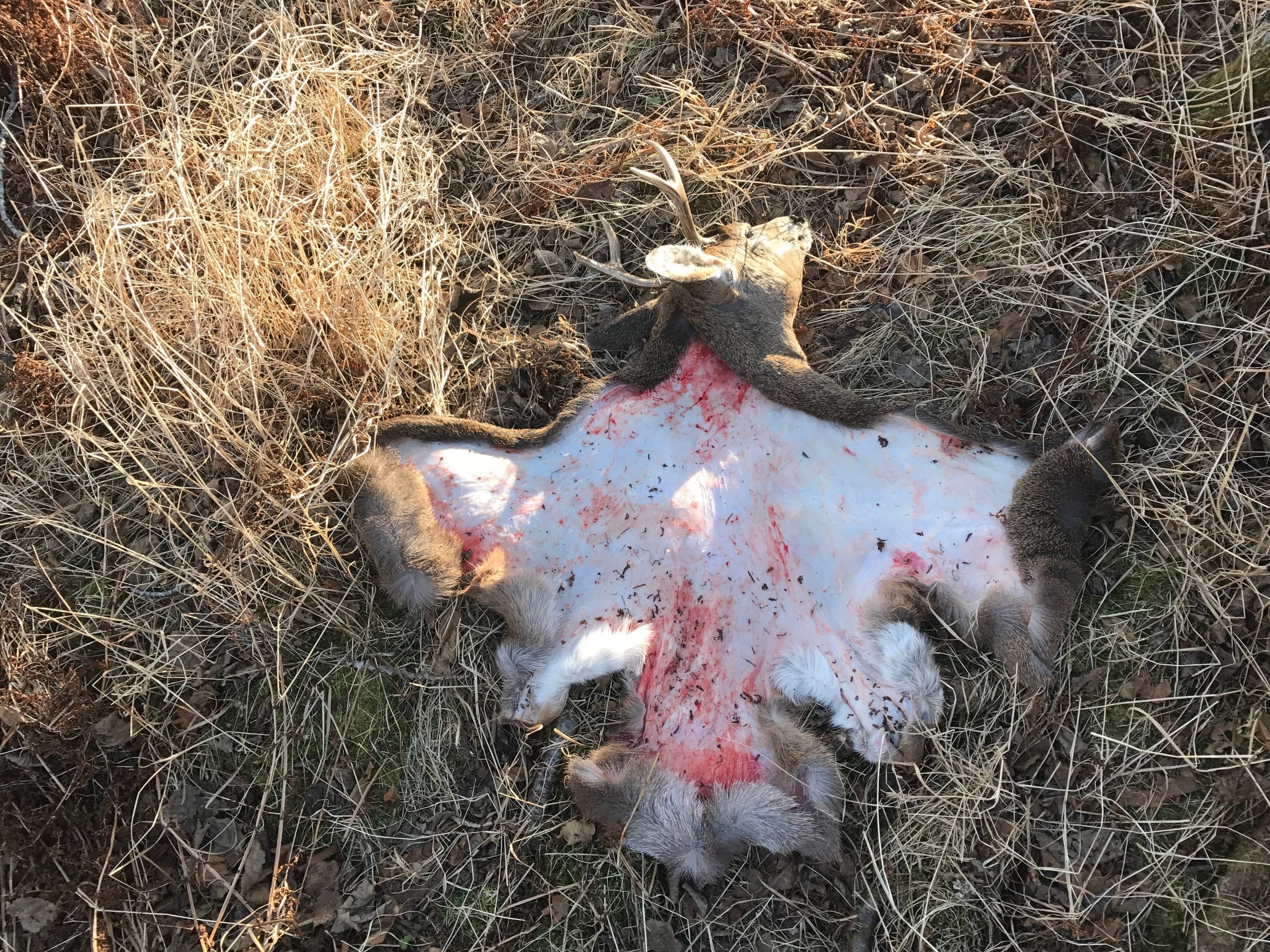
Deer cape laid out flesh-side up on dry grass and brush, with the antlered head still attached at the top; hide is white with red blood smears.

Skinning the Cape Off of the Skull

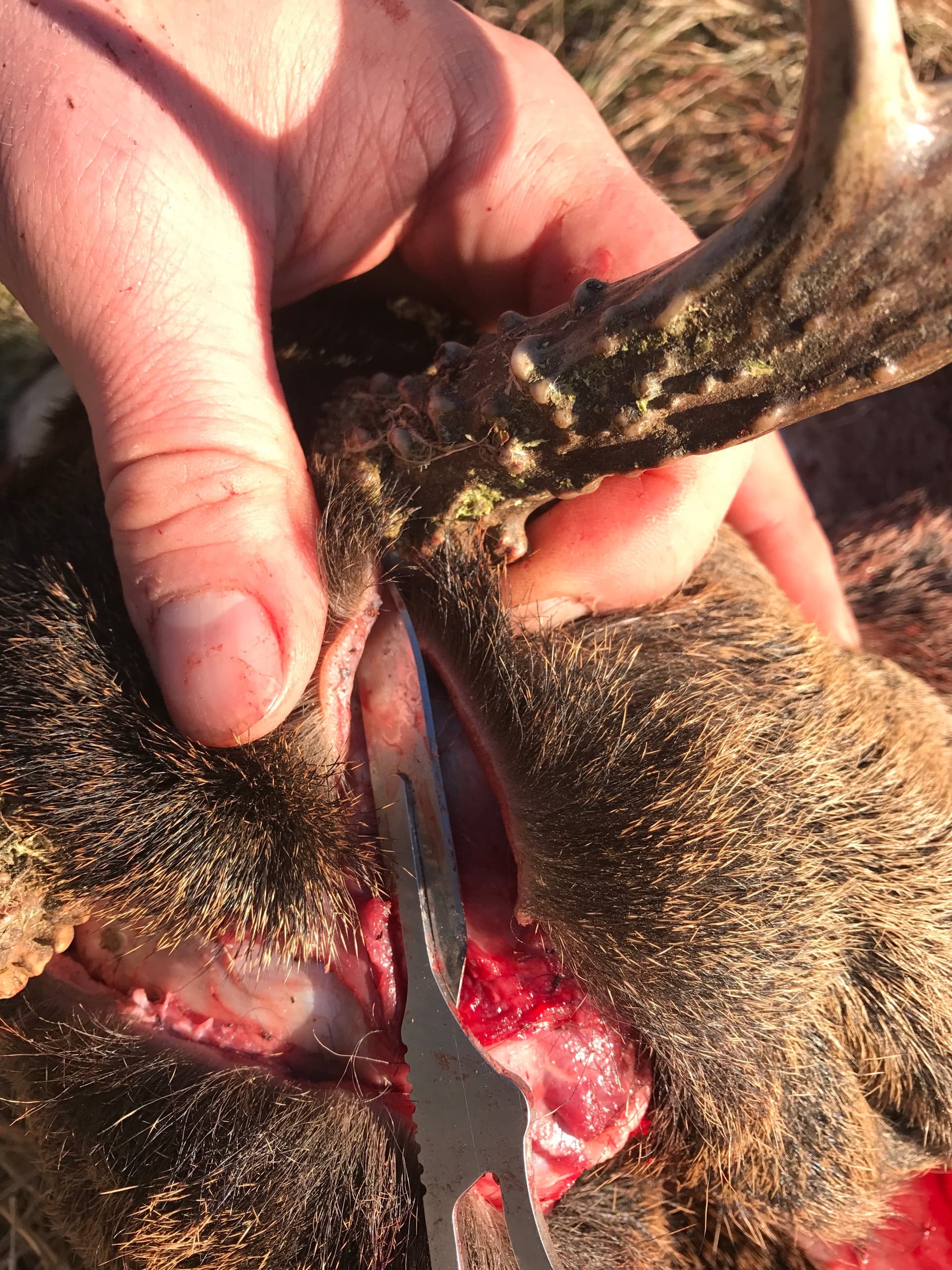
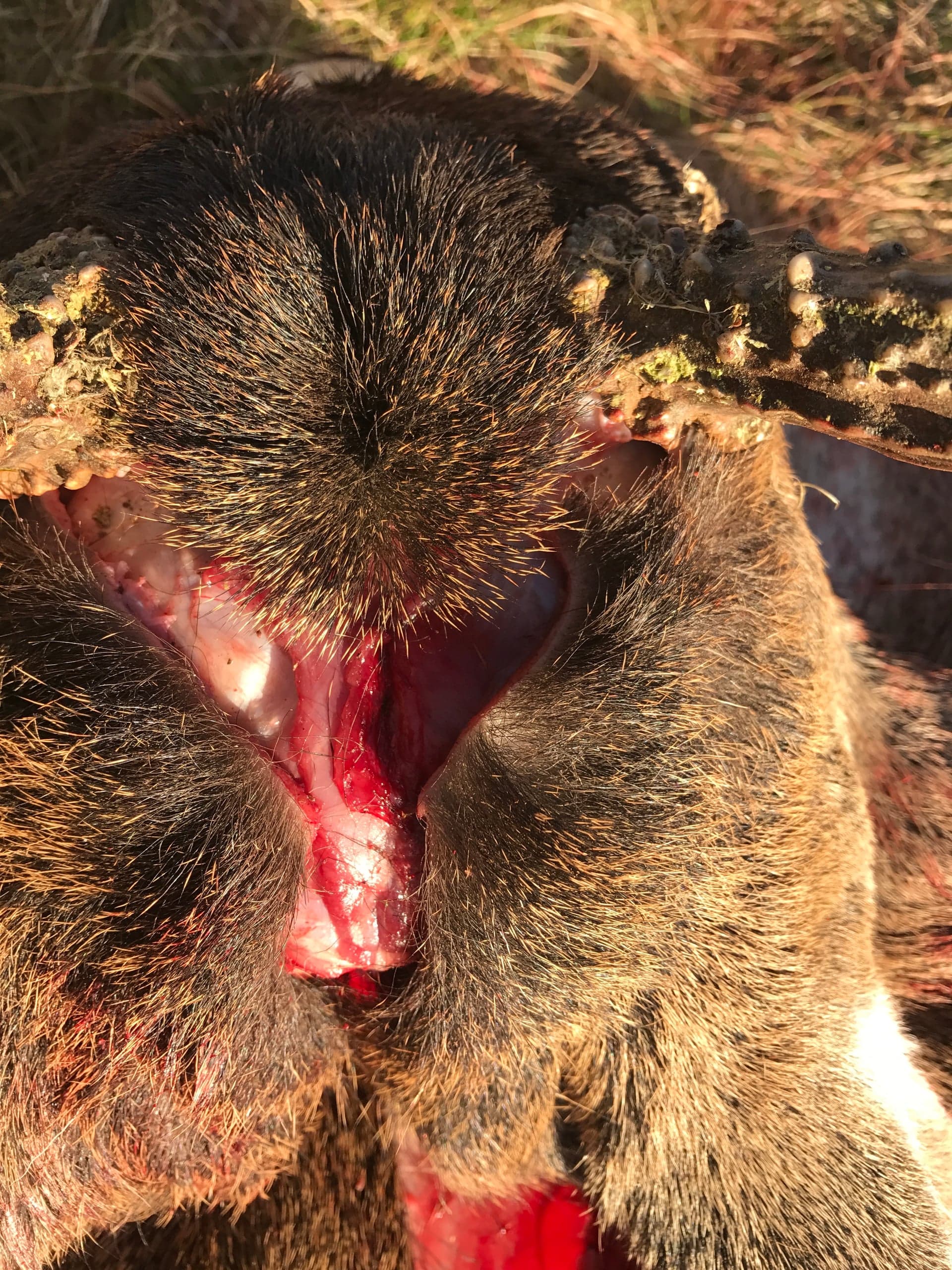
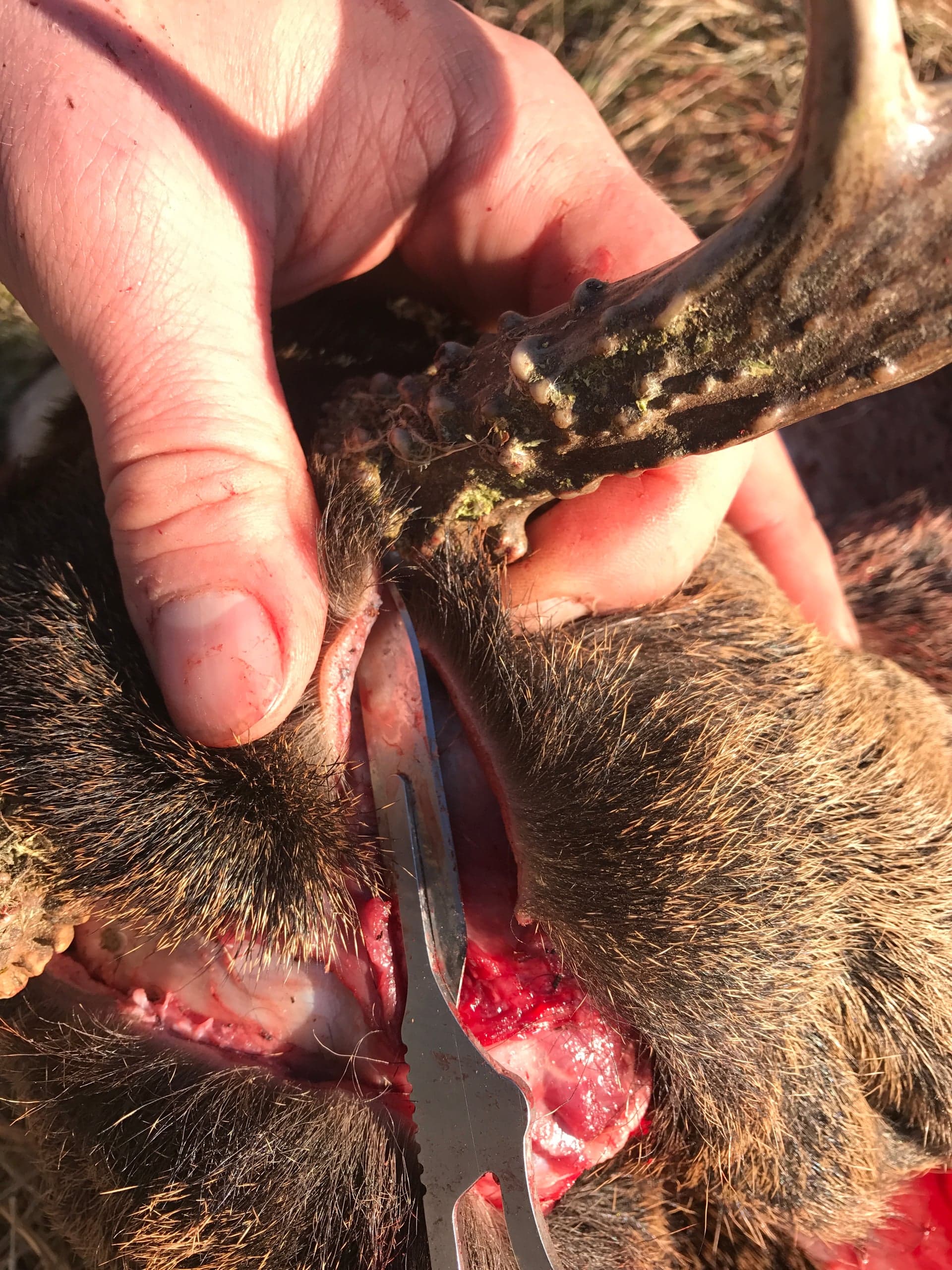
Two side-by-side close-up photographs showing the top of a deer's head between the antler bases. Left photo: a hand holds an antler back while a knife begins the Y cut along the hide, exposing pink tissue. Right photo: the completed Y-shaped incision running from between the antler bases down the back of the skull, hide parted to reveal the underlying flesh.

Good Luck on Your Trips!

WILD REFLECTIONS Chugiak, AK
More from the Bench

Other articles

Browse the rest of the field guide — straightforward, studio-grade taxidermy notes from Grant.